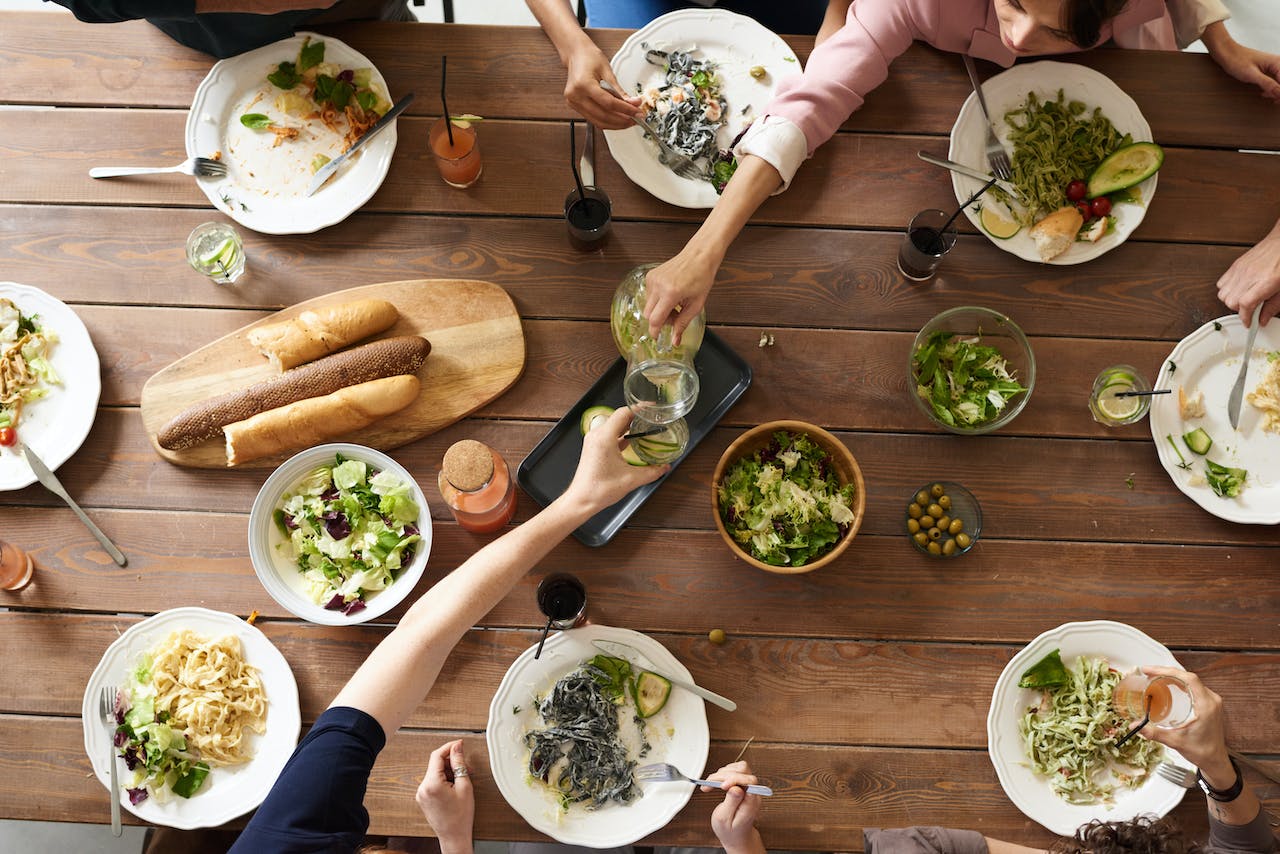
This week, as many of us finalize plans for Thanksgiving, it’s time to consider: Who’s invited to your table?
I’ve veered away from my ambitious reading list recently and begun to read John Pavolvitz’s A Bigger Table. The book focuses primarily on the Christian church’s failure to live up to its founder’s invitation, but it also addresses the more religion-transcendent, universally-relevant issue of inclusion.
The world is composed of myriad religions, worldviews and lifestyles. To assume that one’s own cocktail of beliefs and motivators is superior to the 7.8 billion others on the earth is ignorant at the least and potentially harmful if weaponized. That’s not to say you shouldn’t come up with your own very specific and thought-out worldview. You should.
But to have the arrogance to assume you’ve got it all figured out and that the rest of the world doesn’t is, well, sad.
Habitual exclusion of others leads to a very lonely life. A lifestyle of exclusion catches up with you. For instance, the late infamous bigot Fred Phelps led his small church of Westboro Baptist from relative anonymity to national attention by venomously protesting the funerals of gay teens and others perceived as supporting the LGBT+ community.
In the end, however, Phelps’ own congregation decided his brand of bigotry wasn’t bigoted enough for their tastes and they turned on him. Phelps died alone and excommunicated after investing so much time and energy into an exclusionary worldview that backfired on him.
It’s easy to say, “I accept everybody” from our own insular group of friends, family and associates. Like other creatures, we often gravitate toward those who look, love and believe like us, because anything in the unknown other category runs the risk of harming us. What we often forget is that not engaging with the unknown other often takes us down the road of ideological incest. We get so caught up in our ever-narrowing worldviews that we become a grotesque version of that thing we sought to be at the beginning of our journeys.

So what does your table look like on any given day? Do you belong to an exclusive group of cookie-cutter clones? Or do you extend your hospitality to those from whom you could learn a few new things? Could you invite the unloveable, the undesirable or the underpaid? Is there room at your table for those who look differently, who love differently and who believe differently than you?
If not, you’re missing out. Make space for the others into holiday season and beyond. You’ll be thankful that you did.
(Note: This post includes affiliate links. This means that, for every purchase you make following some of my links, I get a cut from the product provider. This doesn’t cost you any extra money, but it certainly can help me pay the bills! As an Amazon Associate, I earn from qualifying purchases.)